

Creative solutions bring safety and freedom
Bathroom Solutions
England
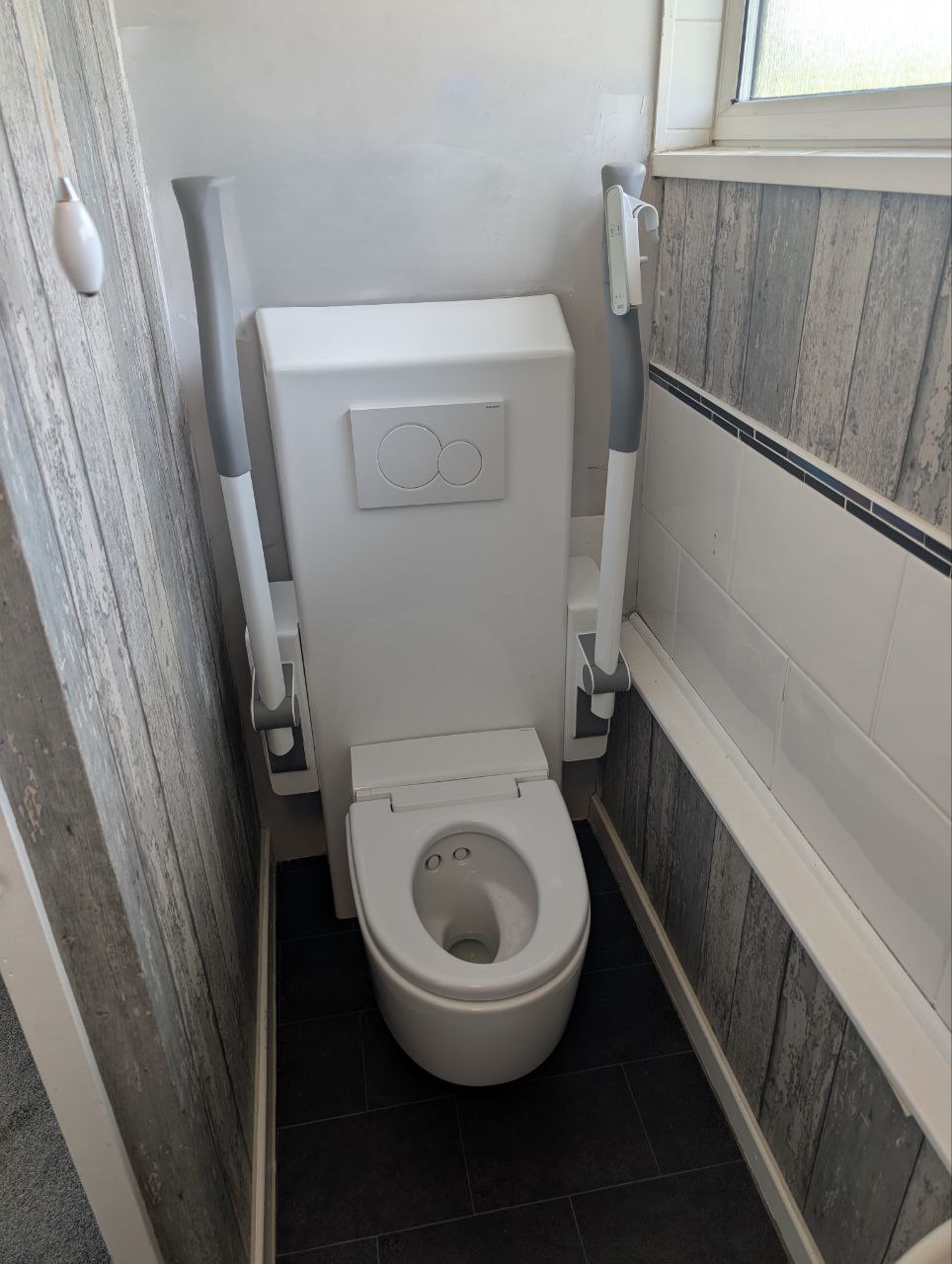
When working in home environments, occupational therapists (OTs) often face the challenge of balancing user needs with carer safety - especially where space is tight. In this case, the client previously used a standard toilet in a small bathroom, where carers frequently had to twist awkwardly to assist, creating a manual handling risk.
Challenge – Balancing User Needs and Carer Safety in Tight Spaces
When working in home environments, occupational therapists (OTs) often face the challenge of balancing user needs with carer safety – especially where space is tight. In this case, the client previously used a standard toilet in a small bathroom, where carers frequently had to twist awkwardly to assist, creating a manual handling risk.
Strategy – Safer Postures and Single-Handed Care as the Goal
The OT’s goal was clear: remove carer strain, enable safer working postures, and, where possible, reduce care to a single-handed approach. Achieving this required a solution that not only supported the user’s independence but also fitted within the very limited available space.
Solution – Toilet Lifter and AquaClean for Space-Efficient Care
A Ropox Toilet Lifter was chosen for its compact design, height adjustability, and ease of positioning. These features allow carers to work at an ergonomic height, reducing bending and twisting, and enabling the user to transfer more independently. Pairing this with the Geberit AquaClean brought further benefits. The integrated cleaning function reduces the number of transfers needed for personal hygiene, minimising manual handling interventions and improving user dignity. The AquaClean’s comfort settings also help the user remain seated for longer without discomfort, further reducing care demands.
“We were unsure if the equipment would fit, but are delighted with the smart installation and use of space.”
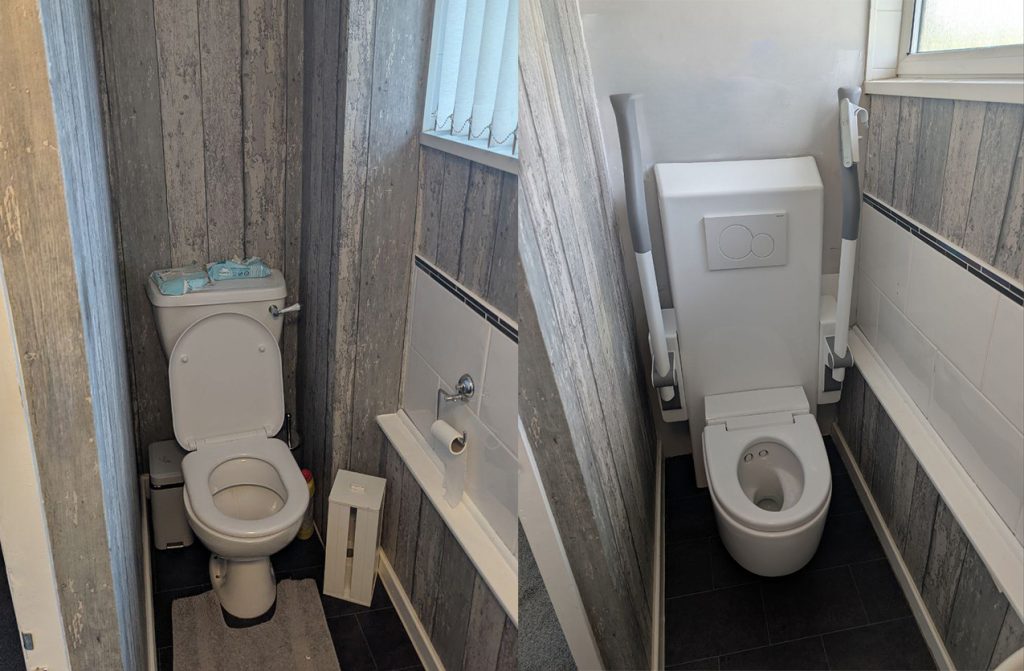
Result – Safer, More Independent Care in a Confined Bathroom
The combination provided an ergonomic, space-efficient adaptation that met every requirement:
- Carers now work in safer, upright positions, avoiding twisting in confined areas
- The user can complete more tasks independently, moving towards single-handed care
- Transfers needed for personal hygiene are significantly reduced
- The equipment fits perfectly within the space without compromising functionality
“Excellent feedback from all – great installation and clever use of space. Their doubts have turned to satisfaction.”
This case highlights the importance of creative problem-solving in adaptations. By understanding both the manual handling risks and the technical constraints of the space, it is possible to deliver solutions that improve safety, independence, and quality of life – even in the most challenging environments.
Both OT and carers are very pleased with the result.”


