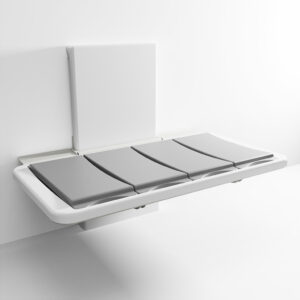
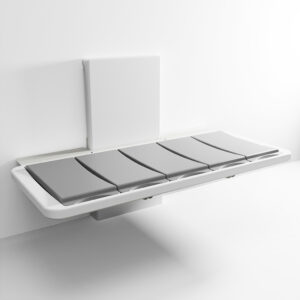
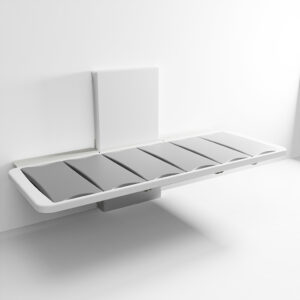
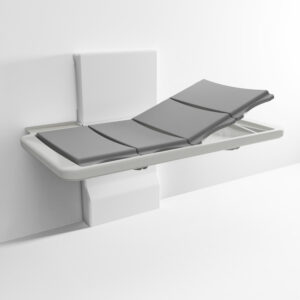
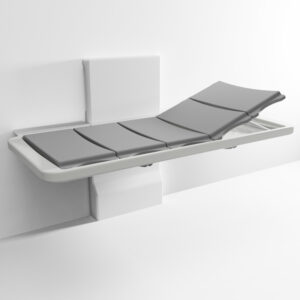
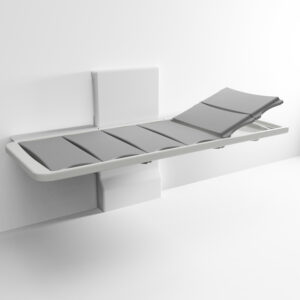
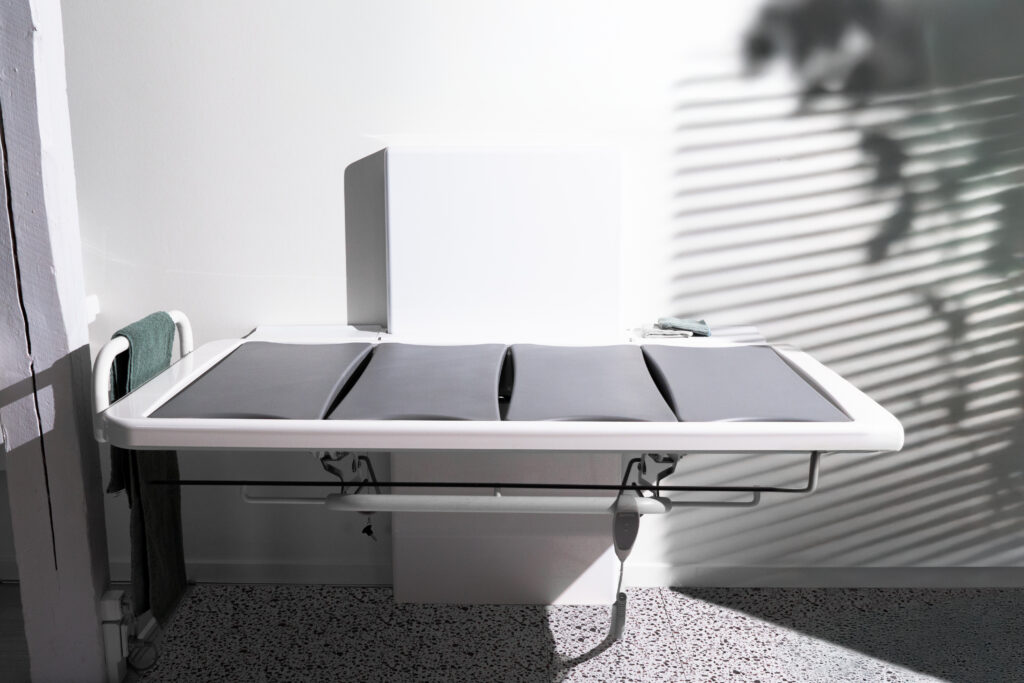
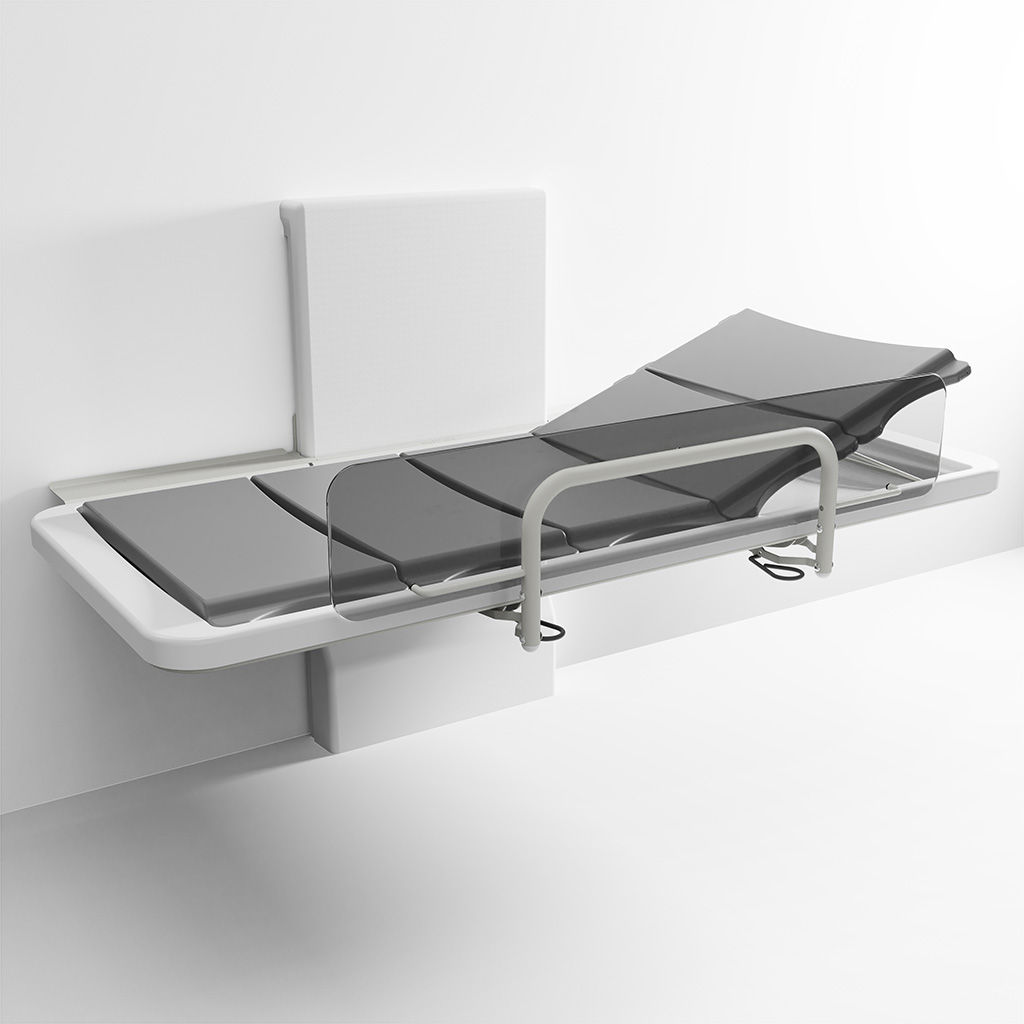
Wall-mounted and foldable shower bed with electric height adjustment
Item no. 40-25023
Bed length:146 cm
Back support:No back support
Item no. 40-25026
Bed length:178 cm
Back support:No back support
Item no. 40-25029
Bed length:210 cm
Back support:No back support
Item no. 40-25073
Bed length:146 cm
Back support:Tiltable back support
Item no. 40-25076
Bed length:178 cm
Back support:Tiltable back support
Item no. 40-25079
Bed length:210 cm
Back support:Tiltable back support
Functions and advantages
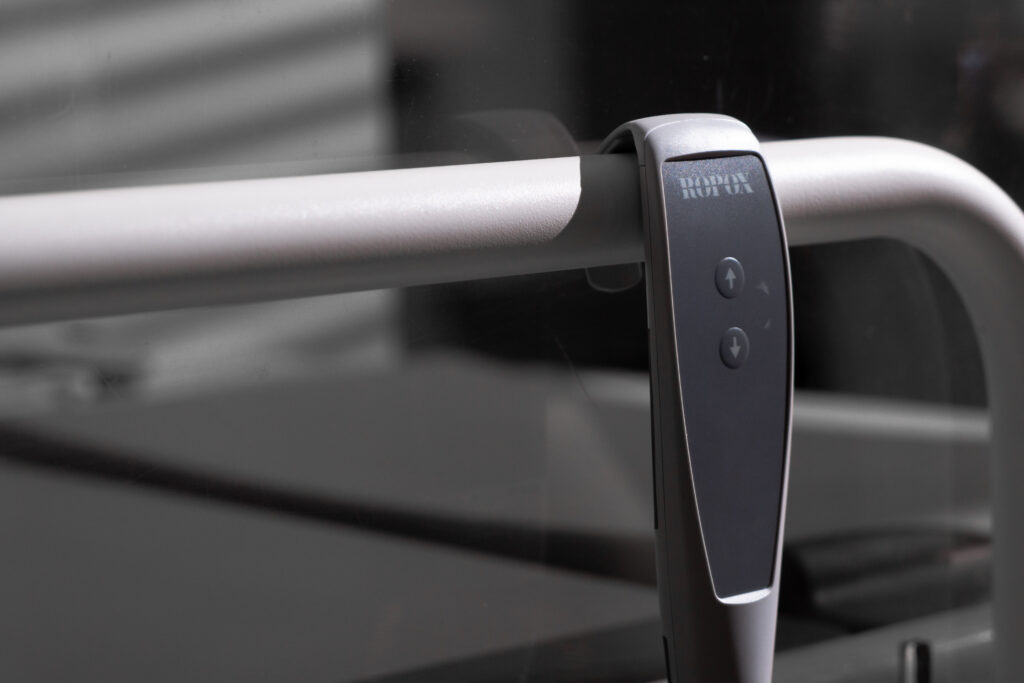
Electric height adjustment
Using a simple hand control, caregivers can electrically adjust the bed to the ideal working height — reducing strain and eliminating unnecessary manual handling throughout the care routine.
Dual-purpose functionality
Designed for both showering and changing, the EasyCare supports efficient hygiene routines without the need to transfer the user between different surfaces — reducing risk, time, and discomfort.
Wall-mounted and foldable
When not in use, the bed folds vertically against the wall, freeing up valuable floor space for easier manoeuvring with a wheelchair and giving caregivers the room they need to work safely. This also keeps the bathroom accessible and unobstructed.
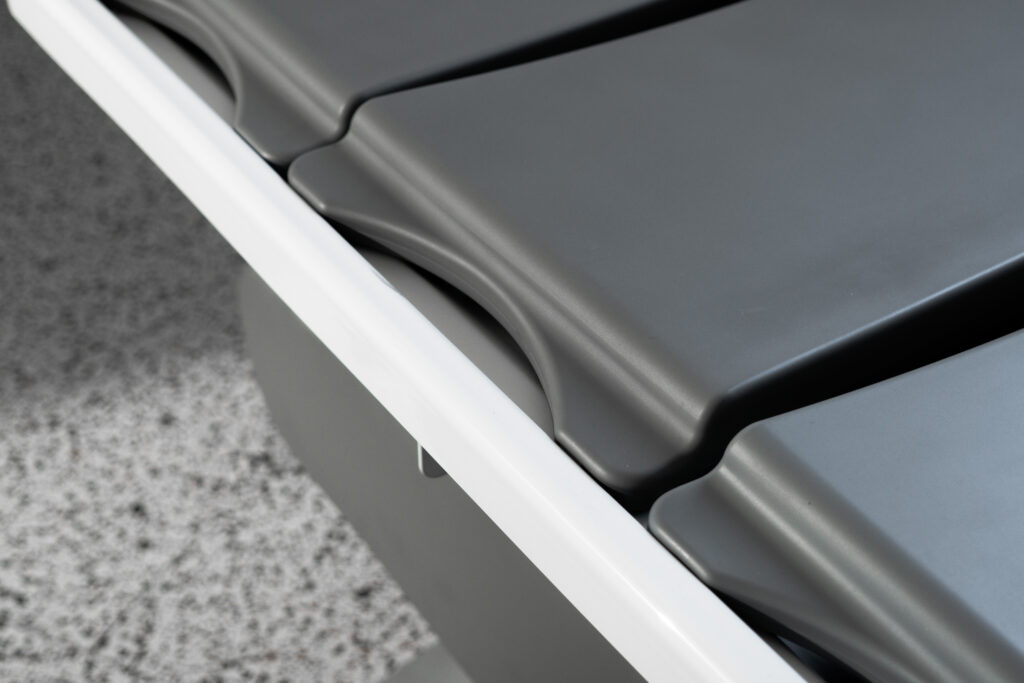
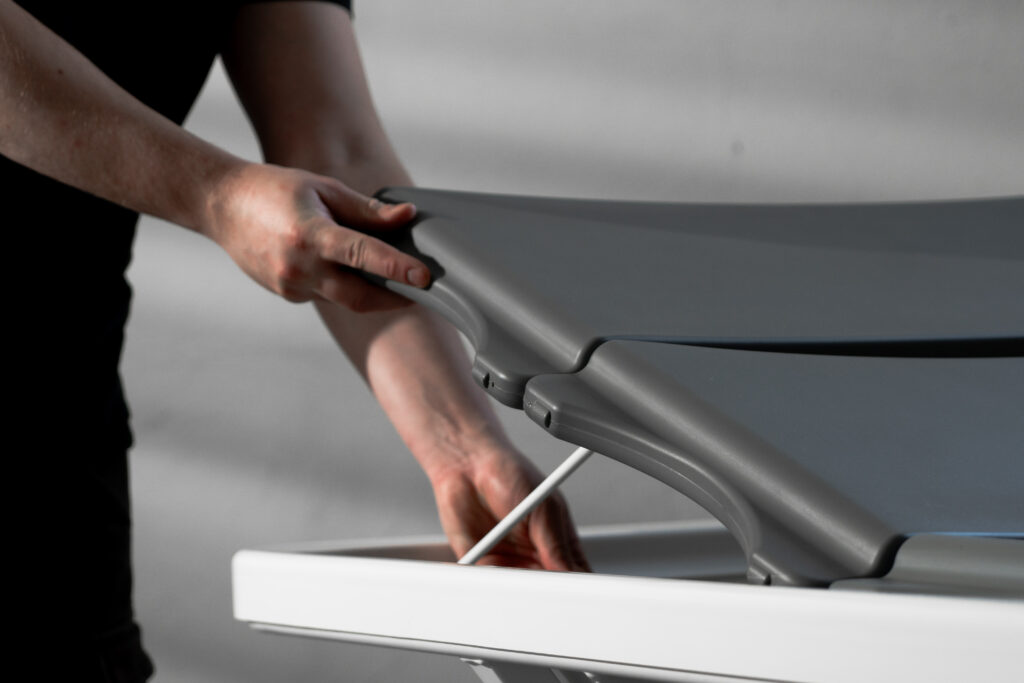
Reversible, double-sided slats
The slats are double-sided and designed to support two distinct tasks. Turned one way, a downward curve helps center the user and improves drainage during showering. Turned the other way, an upward curve makes side-turning easier and safer for caregivers during changing.
Tiltable back support
The back support offers three graduated tilt positions, making EasyCare suitable for users who cannot live fully flat, including those with postural restrictions, acid reflux, respiratory conditions, or neurological and muscular limitations. This improves both comfort and clinical suitability.
Soft PU foam slat surface
The slats are manufactured from soft foam PU with a firm internal structure, giving a comfortable contact surface that reduces pressure risk — particularly important for users with fragile skin or pressure sensitivity. You get the comfort of a soft surface with the structural durability required for commercial use.
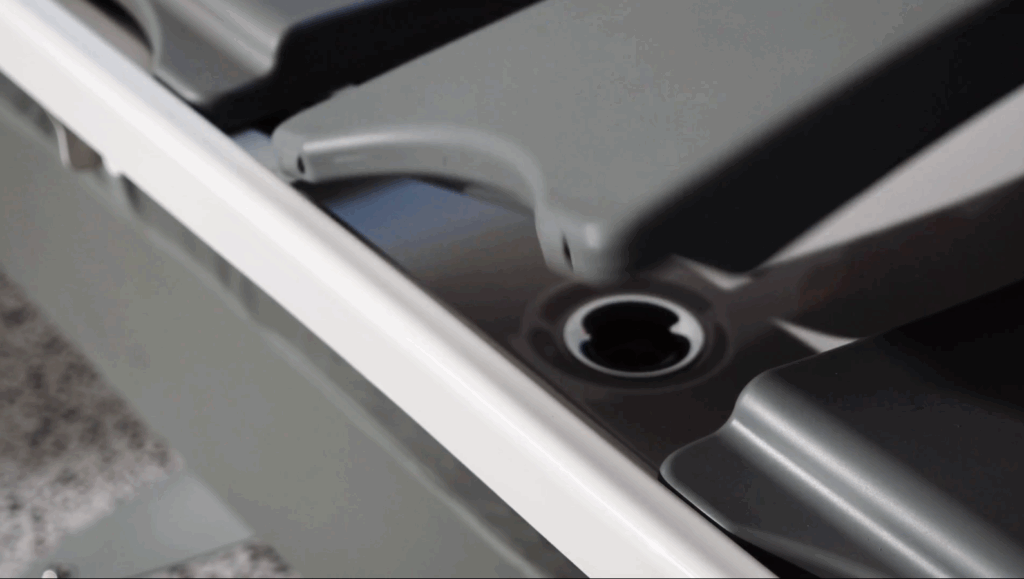
Direct, fixed drainage
EasyCare drains directly into fixed plumbing through an integrated central outlet. There are no water collection trays and no flexible hoses where residual water can pool. This provides better infection control practice.
Simple surfaces
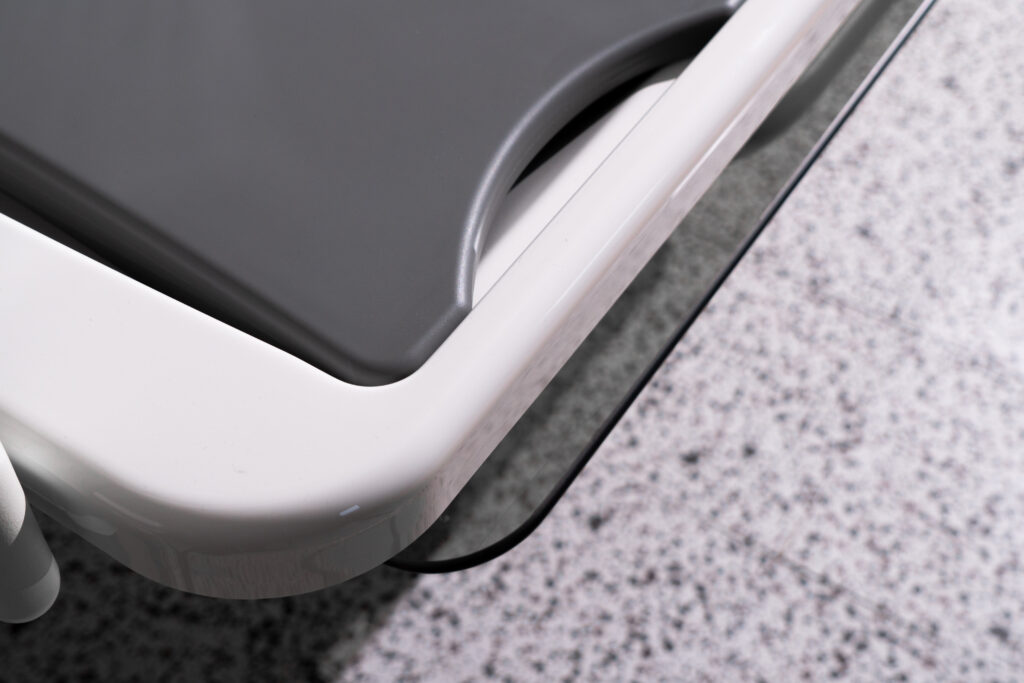
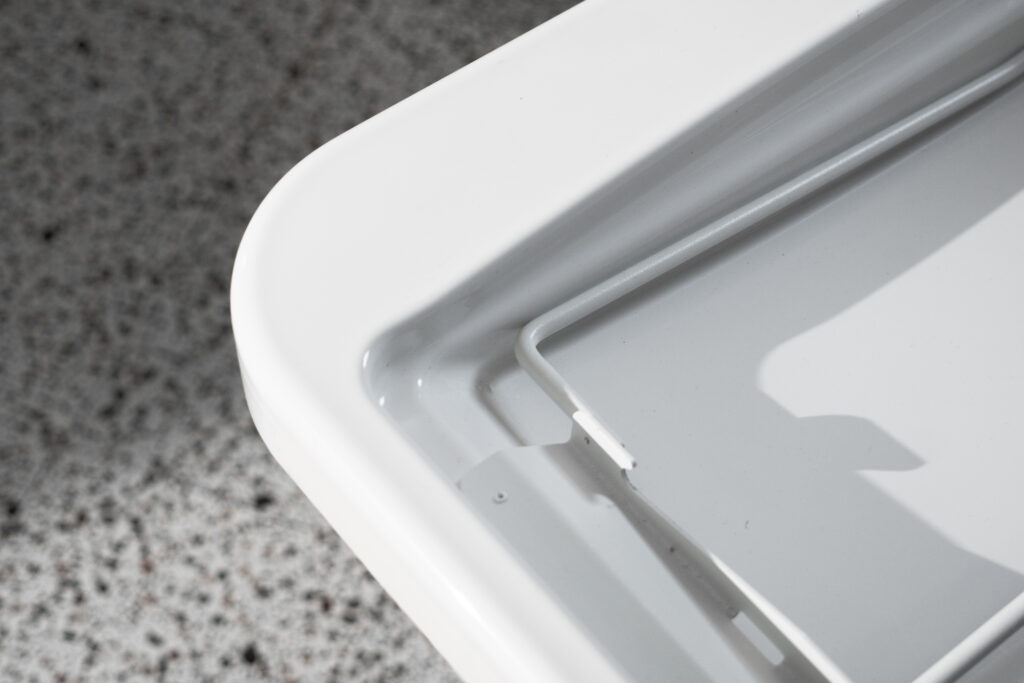
The inner surface of the EasyCare tray is unbroken throughout — no internal joints or seams where dirt and moisture can accumulate. From a clinical perspective, reducing standing water and drainage interfaces is simply better practice.
Cleaning and maintenance
The slats themselves are easy to detach and clean individually, with no narrow gaps, ridges, or recesses that are difficult to reach. No specialist cleaning agents or acid-based regimes are required, reducing both chemical handling and the operational burden on facilities teams.
Additional safety with bed guards
For users who require extra security during showering or changing, Ropox offers optional bed guards designed for the shower beds.
A long-side bed guard runs along the full length of the bed, featuring a tinted transparent plexiglass panel that provides a clear, protective barrier without obstructing the caregiver’s view of the user. It is available in three lengths to match the three available sizes of the EasyCare.
A short-side bed guard can be mounted on either or both of the short ends of the bed, providing additional protection at the head and foot.
Suitable environments
Healthcare facilities
Suitable for hospitals and long-term care environments requiring supported hygiene care with reliable infection control.
Changing Places
Supports inclusiveness in leisure centers, community buildings, and accessible toilets where full-support changing is required.
Schools
Supports pupils in special education schools with high care needs, enabling safe and dignified assisted showering.
Private homes
Enable families to provide safe and ergonomic care within the home environment when full support is necessary.