

Clinical Reasoning for Recommending the Vision Table

Mar 9, 2026
Document explaining how clinical reasoning and evidence‑based practice support occupational therapy recommendations and justify Vision Table equipment funding.
Table of Contents
Occupational Therapy Assessment and Clinical Justification for the Vision Table
Each person is unique and has individual goals, aspirations and needs. An occupational therapy assessment should provide the clinician with a clear understanding of the person’s limitations on occupational performance. This section may help with documentation and clinical reasoning when recommending the Vision Table, a highly adaptable height adjustable desk designed to support independence, posture and daily activities.
Please read more about Clinical reasoning and evidence based practice document.
The information in this document can be used to assist with justification for the recommendation of the Vision Table. When working in statutory services, funding for equipment not held in a local store or available on an agreed catalogue is usually requested via a clinical reasoning document. This is then sometimes reviewed by a manager or a panel of senior staff responsible for budgets.
It is the reliance on this document to be a robust, clinically reasoned and risk assessed explanation of why the equipment is needed, which ultimately leads to funding being agreed.
Professional Standards Supporting Equipment Recommendations
It is worth remembering that occupational therapy professional standards state that:
“The ultimate professional rationale for your intervention or activity… is the enhancement of health and wellbeing through the promotion of occupational performance, engagement and participation in life roles”.
Furthermore, professional standards for occupational therapy practice, conduct and ethics stipulate that occupational therapists “develop…. personalised recommendations based on the occupational performance needs, choices and aspirations of those who access the service” (section 4.5.2.).
Therefore, regardless of any criteria that may or may not be written, it is part of an occupational therapist’s code of conduct to support intervention that enhances occupational performance and supports a person’s aspirations. Any clinical reasoning should address this, as well as risk assessments and an objective view of how a person’s wellbeing will be enhanced by the provision of equipment.
Key Factors to Include in Clinical Reasoning
When recommending assistive equipment such as the Vision Table, a height adjustable desk designed for rehabilitation and daily use, clinical reasoning documentation typically considers:
- The individual’s functional abilities and physical limitations
- The risks associated with unsuitable furniture or posture
- How adjustable equipment supports independence and participation
- The expected improvement in wellbeing, comfort and daily engagement
Find more information about the Vision Table here.
Why a Height Adjustable Desk Improves Occupational Performance
A well-designed height adjustable desk such as the Vision Table can make a meaningful difference to everyday activities such as reading, writing, working, learning or rehabilitation training. Adjustable furniture allows users to create a comfortable and supportive working environment tailored to their body, posture and reach.
Ropox tables are developed in collaboration with users, caregivers and therapists. This ensures the design follows ergonomic principles and supports people with different mobility levels and physical abilities.
By allowing users to adjust the working height, positioning and tabletop angle, height adjustable desks help maintain an optimal working posture and reduce unnecessary strain on the body.
Main Benefits of Height Adjustable Desks
- Improved posture – adjustable height supports a balanced sitting or standing position.
- Reduced strain – correct working height reduces stress on the neck, shoulders and back.
- Greater independence – users can adjust the desk to their own needs without assistance.
- Better accessibility – wheelchair users can approach the desk comfortably.
- Increased activity and participation – a comfortable working position encourages engagement in daily tasks.
These benefits are especially important in rehabilitation settings, educational environments and home care situations where furniture must support long periods of activity.
Wheelchair Accessible Tables from Ropox
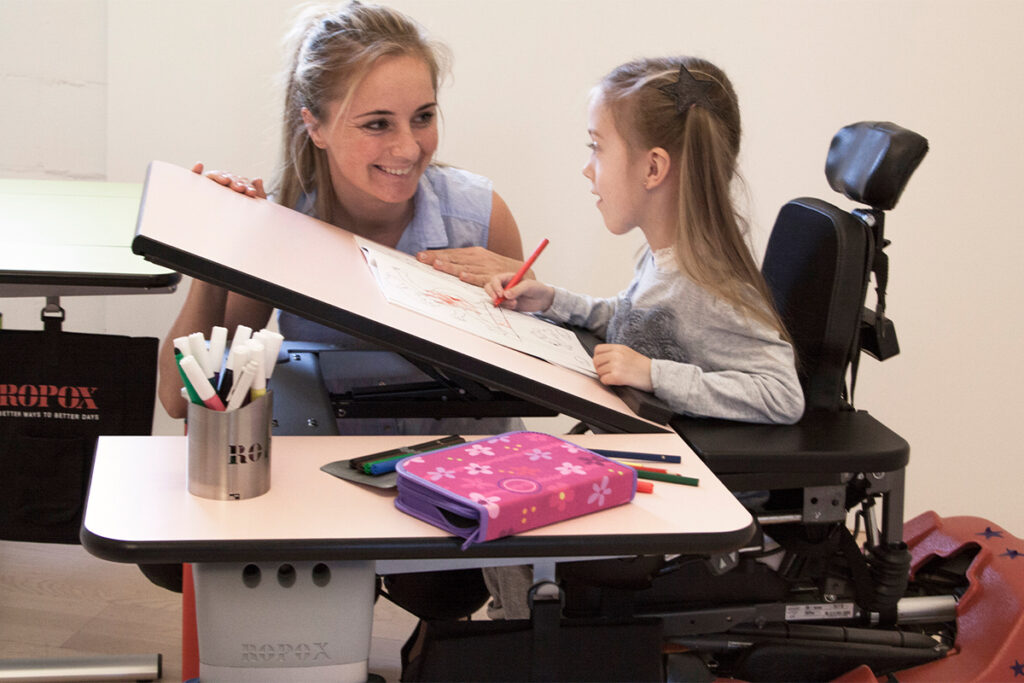
The wheelchair accessible tables from Ropox are developed in collaboration with users, caregivers, and therapists to meet ergonomic principles. This is your assurance that they will enhance your daily life, whether you need a worktable for reading, playing, working, or training.
Our extensive range of disability-friendly tables can be adjusted in multiple ways and adapted for different purposes to meet your requirements.
Read more about our wheelchair accessible tables here.
Features that Support Accessibility
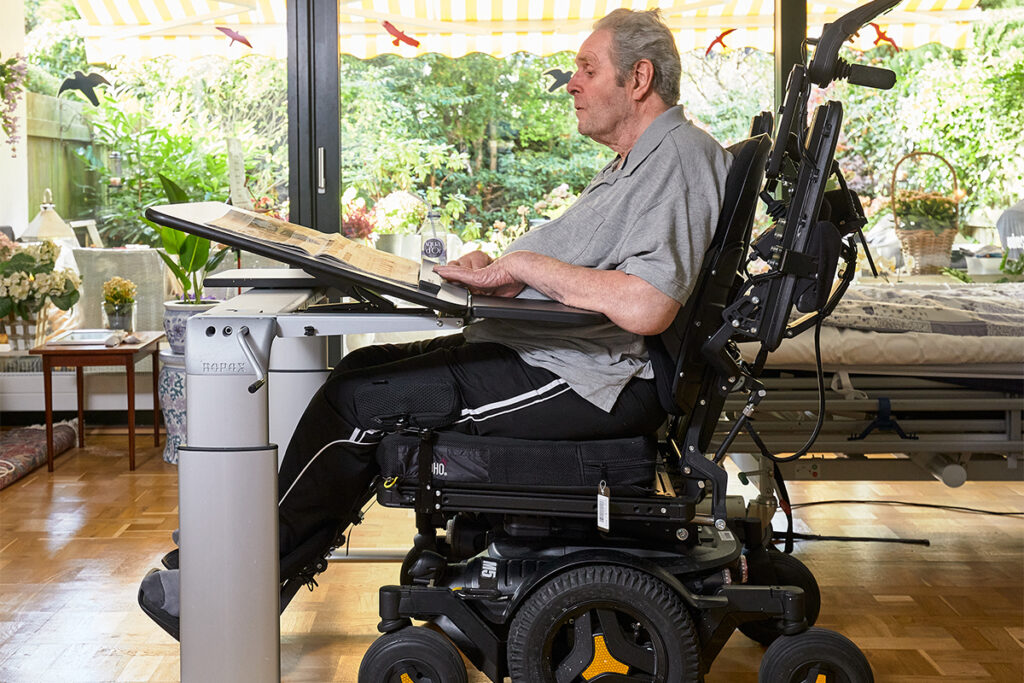
Accessible height adjustable desks include several design features that support users with varying physical abilities:
- Open space underneath the table for wheelchair access
- Flexible height adjustment to suit different users
- Stable construction for safety and comfort
- Optional arm supports that relieve strain on the upper body
These features make the tables well suited for use in private homes, schools, care environments, rehabilitation centres and healthcare facilities.
Technical Specifications and Advantages of the Vision Table
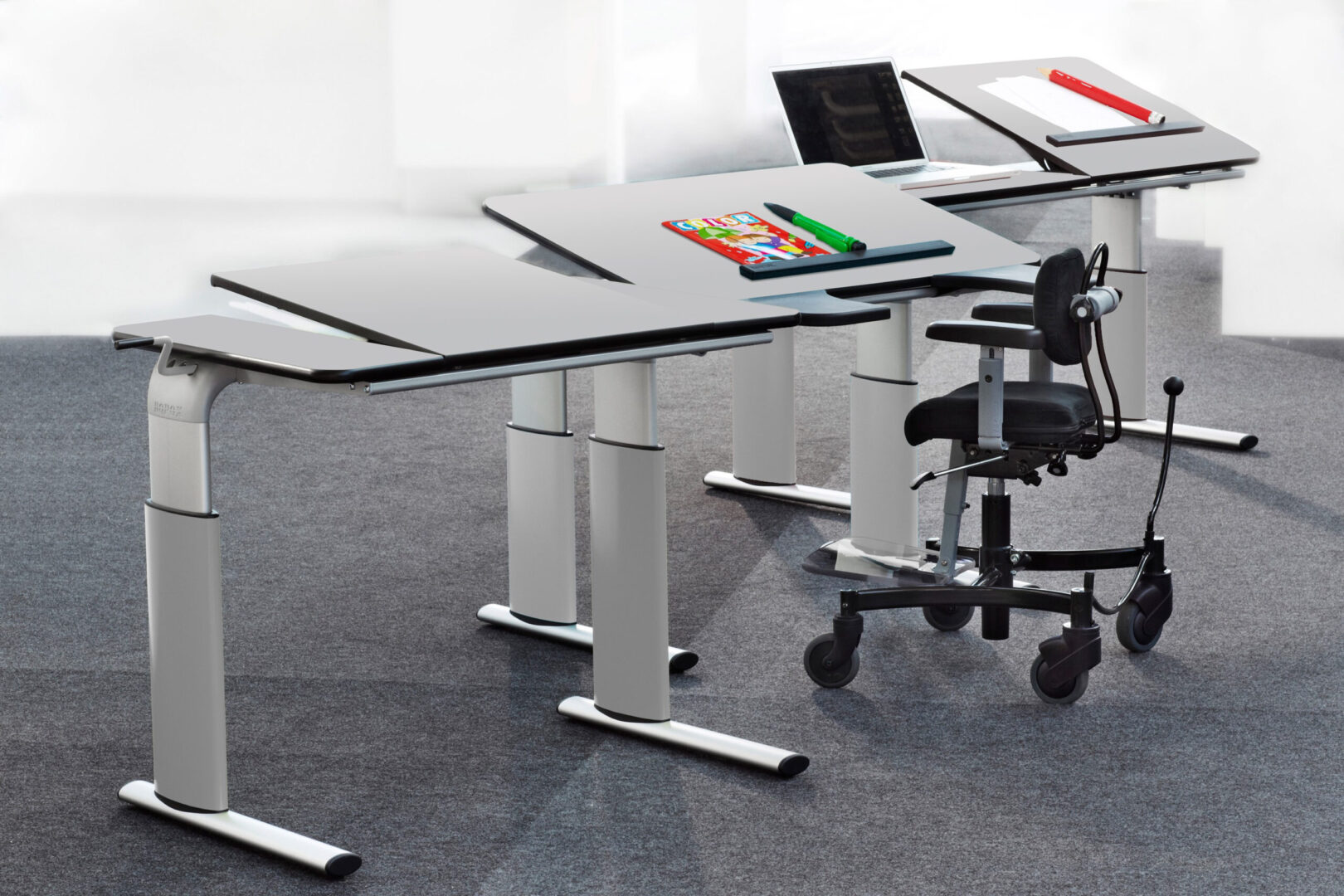
The Vision Table is a series of height adjustable desks with tiltable tabletop designed to support ergonomic working positions and everyday independence. The flexible design makes it suitable for a broad range of users including wheelchair users, individuals with limited mobility, and people who require adaptable working environments.
These tables offer an array of tabletop sizes, models, adjustment options, and a range of features that will make your daily life easier.
Key Features of the Vision Table
- You can tilt the tabletop (0–71°) and shorten the distance to documents on the tabletop.
- The MagRule magnet keeps your documents in place even when the tabletop is tilted.
- The tabletop has a matte surface — no annoying glare.
- You can adjust the height (60–90 cm) manually with a handle or electrically via a control switch.
- Arm supports help relieve your forearms and contribute to a balanced sitting posture.
- The design provides excellent legroom and access for wheelchair users.
Supporting Better Sitting Positions
A good sitting position is fundamental for comfort and long-term health. Sitting for extended periods can place strain on the back, shoulders and neck. Adjustable furniture allows users to vary their position and maintain a healthier posture throughout the day.
The Vision Table supports this by allowing users to:
- Adjust the table to the correct working height
- Change posture during different activities
- Bring documents closer using the tiltable tabletop
- Maintain a balanced and comfortable seating position
With the right desk, users can remain active and engaged in everyday tasks such as studying, working, reading or rehabilitation training.
Find out more about the Vision Table height adjustable desk and how this highly adaptable solution can support posture, independence and daily activities in a wide range of environments. Explore product features, clinical benefits and application guidance.


